LogoAutorelational Eating
HomeAboutSubstackSign inStart free

Healthy eating without the hard

Break unhealthy eating habits and rebuild your relationships with self, food, and body so nurturing your health and well-being become the natural outcome.

Start free

Science-Backed

Built from established behavioral, cognitive, and somatic science — focused on how regulation, learning, and decision-making actually work.

State-Sensitive

Works with your actual internal state and capacity instead of assuming you have infinite ability and ideal conditions to follow an external plan consistently.

Practice-Based

Teaches clear concepts and practices you can use in real moments. No motivation, discipline, tracking, or white-knuckling required.

Why it matters

A better way to think about healthy eating

Healthy eating is not just about what is on your plate. It is also about whether you can feed yourself without fear.

  • Whether you can make choices without spiralling
  • Whether you can respond to your body without treating it like it is wrong.
  • Whether you can care for yourself without punishment.
  • Whether food can become part of your life instead of the thing your whole life revolves around.
Learn more

Autorelational Eating works by changing what shapes eating in the first place:

The meanings attached to food, hunger, body size, appetite, rest, needs, and “failure.”
The state your body is in when moments of choice arrive.
The capacity you have available to pause, respond, and care for yourself.

The wiring that makes certain eating patterns run on autopilot.

When those shift, behavior changes naturally on its own

Not because you found the motivation or built discipline, but because your system stops generating the same automatic patterns. Healthier choices become the natural outcome when your system is no longer organized around fear, pressure, and internal fighting.

What healthy eating actually is

Truly healthy eating doesn't come from rules, plans, willpower, or shoulds. It comes from healthy relationships between self, body, agency, and the real conditions of your life.

Connected
You learn to notice what is happening inside you instead of only trying to control what is happening with food. That includes thoughts, emotions, body signals, needs, fears, impulses, and patterns. You cannot respond to what you cannot recognize.
Autonomous
You learn to make food and body choices from self-trust instead of obedience, rebellion, shame, or fear. Autonomy is what lets you choose what supports you, what you enjoy, and what fits without turning eating into another test of your worth.
Responsive
You learn to respond to your body, emotions, needs, and real-life circumstances with more care and less punishment. Your patterns are not random. They are usually trying to solve something, soothe something, protect something, or meet a need in the only way your system currently knows.
Contextual
You stop treating eating like it happens in a perfect wellness bubble. Food choices are shaped by stress, money, time, access, energy, relationships, culture, trauma, beliefs, nervous system, health status, and environment. Real support has to work in your actual life.

What makes this different from most healthy eating advice

Most advice tells you what, or how, to eat and requires a perfect version of you to live a perfect day. Autorelational Eating works with the lifey actually have, and the person you actually are: your body, nervous system, history, capacity, environment, and patterns.

Start free

Built on established behavioral science

Rooted in cognitive, somatic, behavioral, and nervous-system-informed models of how change actually happens. Not trends or guesswork.

Developed through long-term applied practice

Formed through years of direct work with real people and real eating patterns. Not just theory.

A process you can learn and return to

A usable process for understanding what is happening, interrupting the spiral, and repairing without starting over.

Learn how to get started  →

Take the Free Patterns Quiz

Find the eating pattern most likely to keep you stuck and what actually helps you interrupt it.

Take the quiz

Free Support Hub

Use simple tools for food noise, shame spirals, capacity checks, and real-life eating moments.

Coming soon
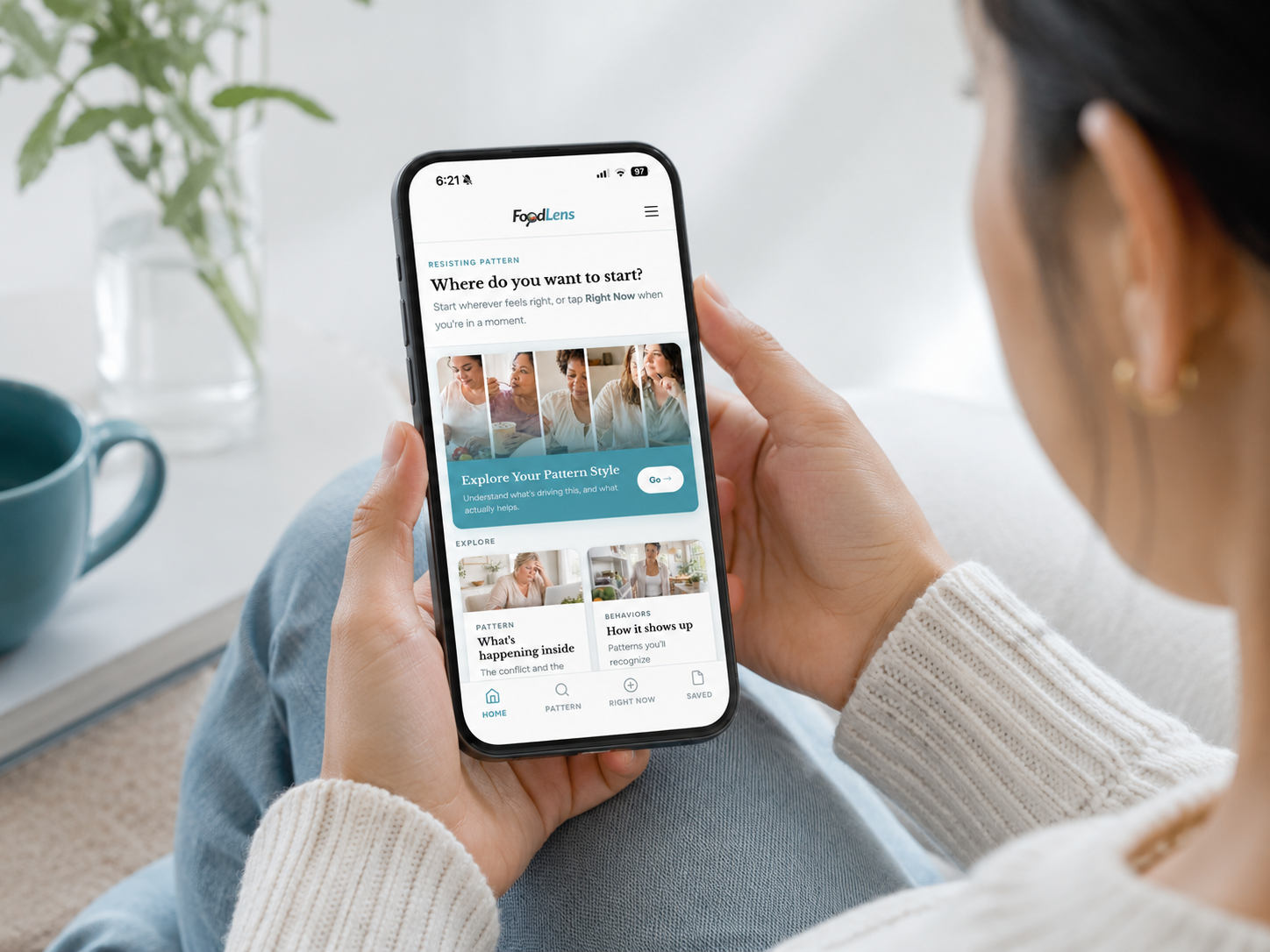
FoodLens

A paid web app for understanding what is happening in the moments when food feels harder than it should.

Explore FoodLens

Some of what people say

★★★★★

“I’m actually comfortable in my clothes now. I feel so much lighter and wake up with a smile on my face instead of the sense of dread that I used to.”

Sharon
Retired Librarian
★★★★★

“The guilt and shame I felt around food is all gone. All that old negotiating in my head over what I should or shouldn’t eat is gone.”

Jess
Teacher
★★★★★

“I don’t judge myself. I don’t think about food as much. I eat what I want without feeling guilty, and I feel so much better in my body.”

Raquel 
Women's Health Coach

Stay in the loop

Get essays, tools, and updates for rebuilding your relationship with food, body, and self.

Image
Autorelational Eating

For the space between knowing what supports you and being able to live it.

START HERE
Free quizSupport hubGet FoodLens
EXPLORE
AboutNewsletterSign in
LEARN
BlogSubstackPodcast
Autorelational Eating provides education, training, and tools related to behavior, embodiment, and the relationship with food, body, and self. This material is not medical or mental health care and should not be used as a substitute for professional diagnosis, treatment, or advice. If you have concerns about your health, consult a physician or another qualified health professional.
© 2026 Autorelational Eating. All rights reserved.
Terms and Conditions | Privacy Policy